What Is Air Filtration & HVAC Filters?
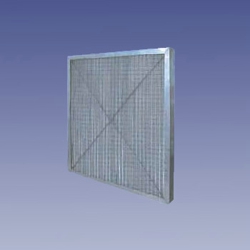
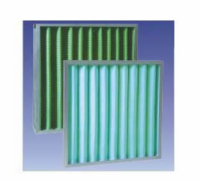
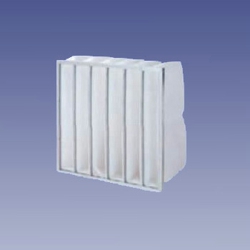
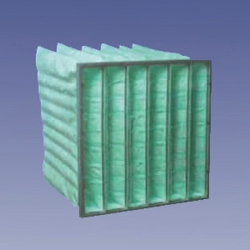
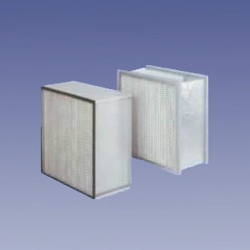
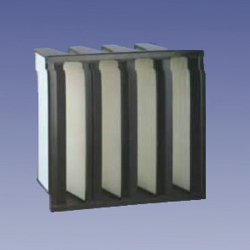
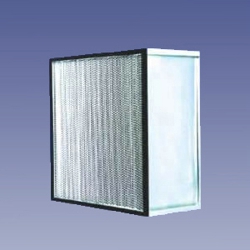
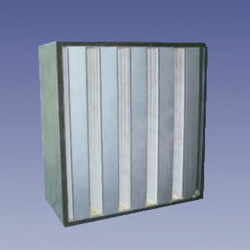
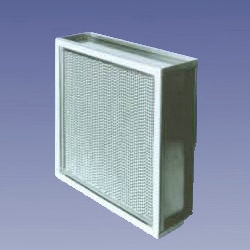
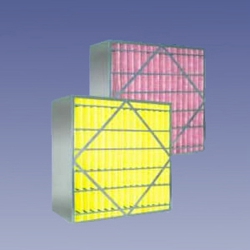
Air filtration removes dust, pollen, microbes and aerosols from moving air using panel, pocket, HEPA and ULPA media, protecting HVAC plant and occupied or process spaces.
Key Takeaways
- Grade is set by MERV (ASHRAE) and by HEPA/ULPA efficiency at 0.3 um.
- Pocket and panel filters protect coils; HEPA/ULPA protect cleanrooms.
- Pressure drop climbs as media loads, so planned change protects fan energy.
- Gasket and frame seal decide real efficiency more than the media label.
Specifications & Comparison
| Grade | MERV 8-16 - H10-H14 HEPA - U15-U17 ULPA |
|---|
| Efficiency | HEPA >=99.95% at 0.3 um |
|---|
| Media | Glass fibre, synthetic, carbon blend |
|---|
| Frame | Cardboard, aluminium, GI; gel or knife-edge gasket |
|---|
| Standards | ISO 16890 - EN 1822 |
|---|
How to Select the Right Air Filtration & HVAC Filters
- Set grade from the space (office MERV 8-13, cleanroom H13/H14).
- Match frame and gasket to the housing to avoid bypass.
- Size face area for design airflow at acceptable pressure drop.
- Add a pre-filter to extend the HEPA stage.
Typical Applications
- Commercial and industrial HVAC
- Pharmaceutical and semiconductor cleanrooms
- Hospital and laboratory air
- Food and beverage processing
Frequently Asked Questions
What does MERV mean?
MERV rates capture of 0.3-10 um particles; higher MERV catches finer dust but needs more fan energy.
When is HEPA required?
For cleanrooms and isolation air where 99.95%+ removal at 0.3 um is needed.
Materials & Chemistry
- Polyester (PET) - the general-duty synthetic, rated to about 130 C, the default for ambient dust and fume.
- Polypropylene (PP) - acid- and moisture-resistant, used to about 90 C in wet or corrosive dust.
- Fiberglass - woven or needled glass fibre for continuous 260 C service on kilns, boilers and incinerators.
- Polytetrafluoroethylene (PTFE) - the most chemically inert media, 260 C, often with a porous membrane laminate.
- Aramid (Nomex) - a high-temperature organic fibre to about 204 C for hot, non-alkali dust streams.
- Polyphenylene sulfide (PPS / Ryton) - alkali- and sulphur-resistant to 190 C for cement and waste-incineration gas.
Standards & Compliance
- ISO 16890 - the current air-filter classification by ePM1, ePM2.5 and ePM10 capture efficiency.
- EN 779 - the legacy grade system (G4, F7, F9) still shown on many equipment datasheets.
- ASHRAE 52.2 - the North American MERV rating method for HVAC filters.
- OSHA 29 CFR 1910.94 - general ventilation and dust-control requirements for workplaces.
- ATEX 2014/34/EU - equipment rules for combustible-dust and explosive-atmosphere areas.
Buyer's Guide & Common Mistakes
- Match media to peak gas temperature with margin; choose finish for the dust (membrane for fine or sticky, anti-static in ATEX zones).
- Size the bag to the tube sheet exactly - wrong diameter or length is the top cause of premature bag failure.
- Watch the air-to-cloth ratio; too high a face velocity blinds the media and raises pressure drop fast.
- Pre-filter bulk solids ahead of the final fine bag to extend life and cut replacement cost.
Authoritative References
Related Products & Terminology
- Pulse-jet baghouse
- Reverse-air collector
- Cartridge dust collector
- Cyclone pre-filter
- Electrostatic precipitator
- Pleated filter element
- Snap-band collar
- Venturi booster
- Solenoid pulse valve
- Differential-pressure gauge
- Air-to-cloth ratio
- Cage wire
- Anti-static ground
- PTFE membrane laminate
- Oil-water repellent finish
Engineering & Evaluation Notes
In a pulse-jet baghouse, short compressed-air pulses travel down a venturi to snap the dust cake off the cloth; reverse-air and shake-deflate designs use gentler, continuous cleaning suited to woven media. Sizing the air-to-cloth ratio and tracking differential pressure protect filtration efficiency and cut lifecycle cost, while correct cage and venturi geometry keep the bag from abrading or collapsing between cleaning cycles.
Last updated: 2026-10-04. Technical review by KOSA Filtration Engineering · LinkedIn. Specifications are typical industry values; confirm exact grades with our engineering team for your duty.